japonisme

29 March 2011

the fire & the rose

what are we then to do?
knowing that the world has seen holocaust,
war, genocide, and, yet, come this far...
were you there, now, what would you do? swim?,
or stand tremulously, waiting, at the water's edge?


from LITTLE GIDDING

Ash on an old man's sleeve
Is all the ash the burnt roses leave.
Dust in the air suspended
Marks the place where a story ended.
Dust inbreathed was a house-
The walls, the wainscot and the mouse,
The death of hope and despair,
This is the death of air.


There are flood and drouth
Over the eyes and in the mouth,
Dead water and dead sand
Contending for the upper hand.
The parched eviscerate soil
Gapes at the vanity of toil,
Laughs without mirth.
This is the death of earth.


Water and fire succeed
The town, the pasture and the weed.
Water and fire deride
The sacrifice that we denied.
Water and fire shall rot
The marred foundations we forgot,
Of sanctuary and choir.
This is the death of water and fire.


We shall not cease from exploration
And the end of all our exploring
Will be to arrive where we started
And know the place for the first time.
Through the unknown, unremembered gate
When the last of earth left to discover
Is that which was the beginning;


At the source of the longest river
The voice of the hidden waterfall
And the children in the apple-tree
Not known,
because not looked for
But heard, half-heard,
in the stillness
Between two waves of the sea.

Quick now, here, now, always--
A condition of complete simplicity
(Costing not less than everything)
And all shall be well and
All manner of thing shall be well
When the tongues of flames
are in-folded
Into the crowned knot of fire
And the fire and the rose are one.

T. S. Eliot
from Four Quartets

Labels: , , , , , ,

25 March 2011

solitaire

TO LUCK

In the cards and at the bend in the road
we never saw you

in the womb and in the crossfire
in the numbers
whatever you had your hand in


which was everything
we were told never to put
our faith in you
to bow to you humbly after all
because in the end there was nothing

else we could do
but not to believe in you

still we might coax you with pebbles
kept warm in the hand

or coins or the relics
of vanished animals
observances rituals
not binding upon you
who make no promises

we might do such things only
not to neglect you
and risk your disfavor
oh you who are never the same
who are secret as the day when it comes

you whom we explain
as often as we can
without understanding

W. S. Merwin

Labels: , , , , , , ,

02 January 2008

cross-cultural studies

(click)
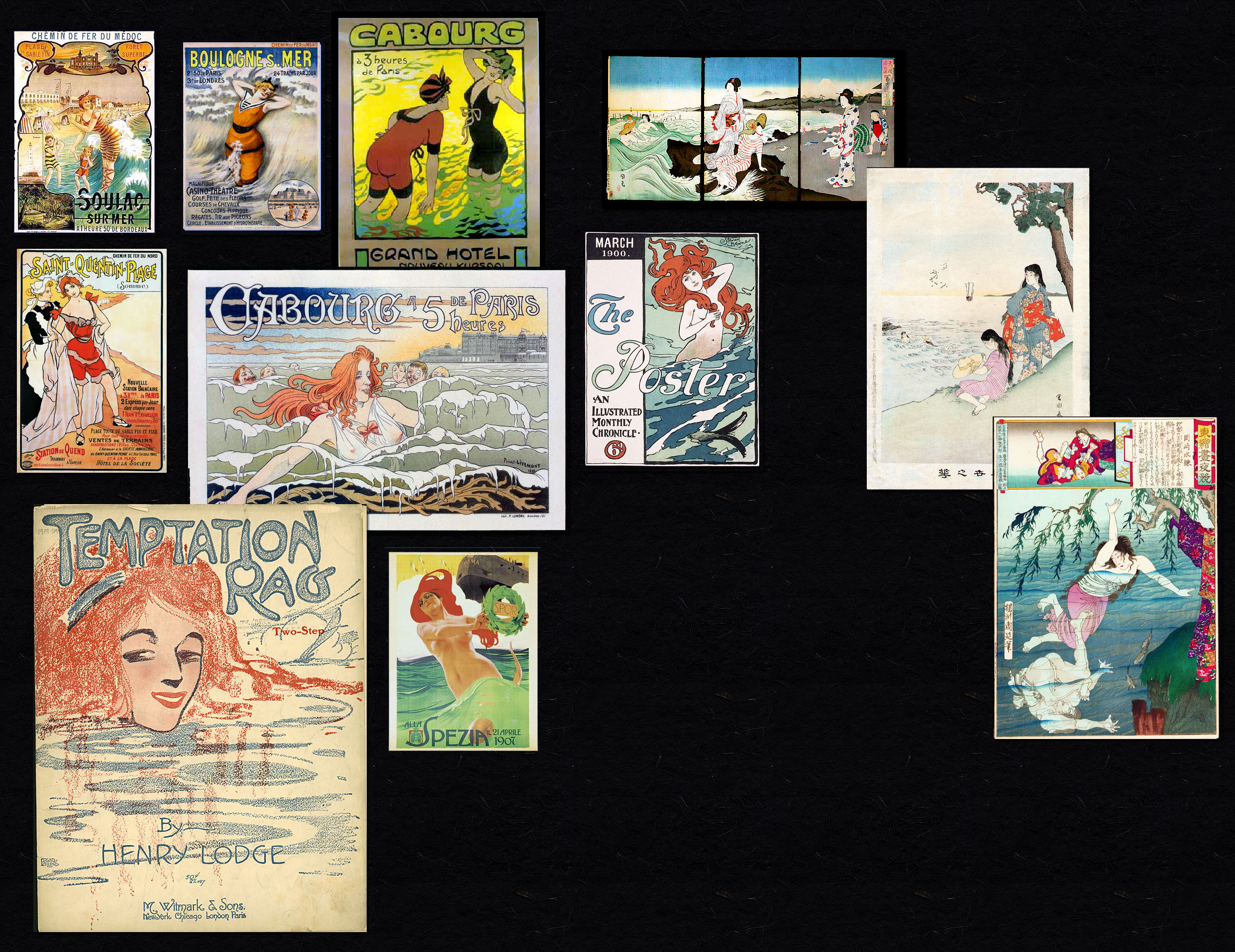
as one can easily see, the history of pleasure swimming has been pretty much the same in the west and in japan.

only in japan you do not need red hair to participate.

Labels: , , , , , , ,

20 June 2007

reaching for the moon

Frank Sinatra Lyrics

REACHING FOR THE MOON

(Irving Berlin)

[Recorded November 29, 1965, Hollywood]

The moon and you appear to be
so near and yet so far from me,

And here am I, on a night in June,
reaching for the moon and you.


I wonder if we'll ever meet,
my song of love is incomplete,

I'm just the words, looking for the tune, reaching for the moon and you.


[musical interlude]

I wonder if we'll ever meet,
my song of love is incomplete,

I'm just the words, looking for the tune, reaching for the moon and you.

The painting by Taikyu (died circa 1945) of a monkey reaching for the moon on the water also contains a tiny Enso with a larger theme:

The monkey seeks the moon in the water,

chasing after it ceaselessly until death.

If instead, it sinks its hand into the deep spring

the clear, pure moonlight will illume
the universe. 1

(image source)

Labels: , , , , , ,

11 May 2007

my yiddisha nightingale


1. Miss Minnie Rosenstein

Had such a voice so fine
Just like Tetrazzini
Any time that Minnie sang a song
You'd think of real estate seven blocks long
Some song!

Young Mister Abie Cohn used to call to her home
Just to hear her singing
Presents he was bringing
Full of bliss!
One night young Abie proposed to the Miss
Like this!

Yiddisha nightingale, sing me a song
Your voice has got such sweetness that it makes me strong
Yiddisha nightingale, sing me a song
I promise that I'll take you on a long honeymoon
I'd give a dollar to hear you, my queen

I wouldn't give a nickel to hear Tetrazzini
Just to hear your cultivated voice good and strong
I'd serve a year in jail
Yiddisha nightingale
Won't you sing me a song?

2. Then said young Abie Cohn
"I'm going to buy a home
One that's made of marble
Dear, where you can warble harmony
And I don't care for expenses you see
That's me!

I'll go and learn to play on the piano, say
You'll sing while I'm playing
People will be saying
As they pass
Some class!"

[song by irving berlin; toshikata mizuno; japanese fabric via florizel; charles louis verwee, a belgian, painted 'vanity.' the vase is by ando jubei, from the meiji era in japan; some considered it the golden age for cloisonne created for export, with the encouragement of the government.1 book design by carlos schwabe; george lepape did the artwork, but i don't know the designer....; lastly is flower viewing from shuntei miyagawa.]

the tune is here.

Labels: , , , , , , , ,

12 February 2007

if music be the food of love, fiddle on wednesday


Nanki-Poo:
The flowers that bloom in the spring,
Tra la,
Breathe promise of merry sunshine —
As we merrily dance and we sing,
Tra la,
We welcome the hope that they bring,
Tra la,
Of a summer of roses and wine,
Of a summer of roses and wine.
And that's what we mean when we say that a thing
Is welcome as flowers that bloom in the spring.
Tra la la la la,
Tra la la la la,
The flowers that bloom in the spring.

Yum-Yum, Pitti-Sing, Nanki-Poo & Pooh-Bah:
Tra la la la la,
Tra la la la la,
Tra la la la la la!

Ko-Ko:
The flowers that bloom in the spring,
Tra la,
Have nothing to do with the case.
I've got to take under my wing,
Tra la,
A most unattractive old thing,

Tra la,
With a caricature of a face,
With a caricature of a face.
And that's what I mean when I say, or I sing,
"Oh, bother the flowers that bloom in the spring."
Tra la la la la,
Tra la la la la,
"Oh, bother the flowers of spring."


Yum-Yum, Pitti-Sing, Nanki-Poo & Pooh-Bah
:
Tra la la la la,
Tra la la la la,
Tra la la la la


(Shuntei Miyagawa, Kunichika Toyohara, Nobukazu Watanabe, Kunitsuna Utagawa, Kunichika Toyohara. princess haiku asked if these prints were available; today's selections are from, to the right, 'japanese prints.' )
Labels: , , , , ,

19 November 2006

virgins in the field

a nabi (a small group of artists dubbed that by a critic--it meant 'prophet'), maurice denis believed as did the japanese that it was foolish to see only oil on canvas within a frame as art.
the nabis often called for "walls for decoration!"

this piece, entitled 'april,' 1892, was one of four panels designed for the walls of a young girl's bedroom. like many of the works of the nabis, here the diagonal structure, simplified shapes, and flat surfaces of bright color also recalled the work of the japanese printmakers they admired.

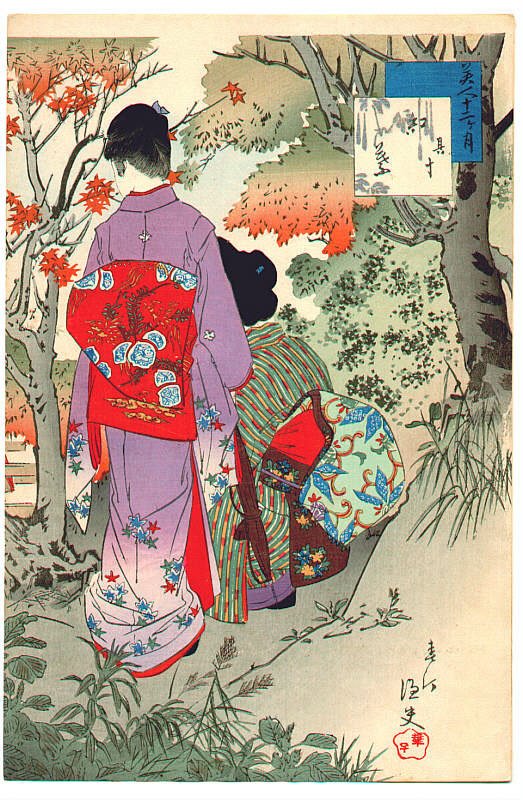
shuntei miagawa's work, 'picking dandelions,' 1904, featured young women and children, which were his favorite topics.

the musee d'orsay in paris features three exhibitions, from 10.31.2006 to 1.21.2007, of denis' work: paintings, drawings, and photographs, along with various related events.

Labels: , ,

29 October 2006

shall we dance


 no frankly i'm not fully satisfied with my answer to lauren, and i've realized i needed to know more about the wider japanese arts culture. i've barely scratched the surface of course, but i'll report some things i've found:

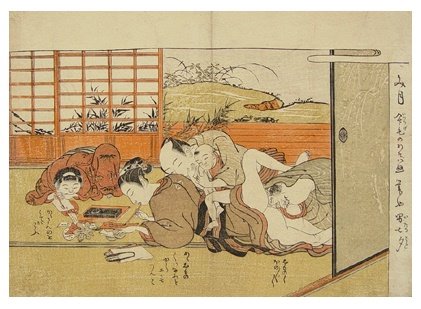
i found no couples dancing at all. until the westerners came, there were plenty of spring painting prints, explicitly spring painting and perfectly matter-of-fact, the neighbor, maid, grandpa or child popping in to say this or that.... but no face-to-face dancing.

and frightfully little group dancing. there are some images of a group of women doing a spring festival dance, but so few that i've been unable to find any online thus far.

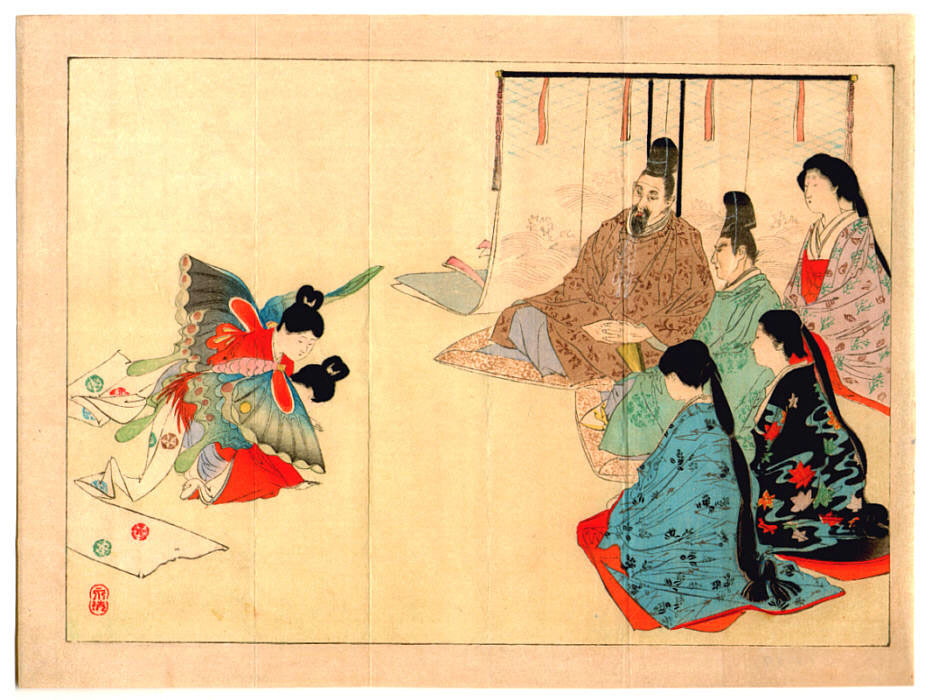
but there are single or paired dancers, men, or women.... and sometimes i can't tell which is which! they impersonate each other, and being a westerner i have not yet educated my eyes to tell the difference. (though noh and kabuki were all men when the westerners arrived, they were mixed, centuries ago when they began. it seemed however that some women discovered courtesanry more profitable than theater, and eventually all women were banned.) this is the butterfly dance; we'll be seeing that again soon.

yes, there are huge theaters with kabuki and scores of people having dinner while they watch, but these three images really represent what i can find of dance--at least as we define it in the west. there are dances with spiritual connotations, but those are not generally for an audience.

of course, ukiyo-e is the art of the floating world. it's the art of the theater and the geisha and the courtesans and the butterfly dancers. some of the rules, restrictions, that came about when the west came in, sadly, slowed down production of the "green house" images.

(seed sowing dance)

Labels: , , ,

19 October 2006

separated at birth?

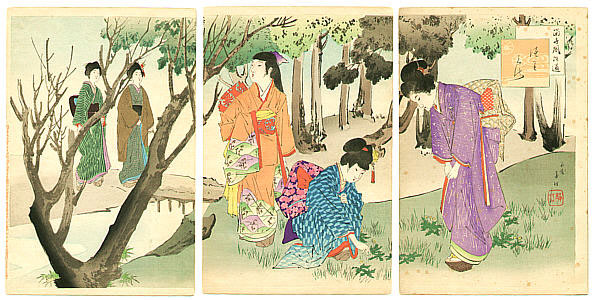
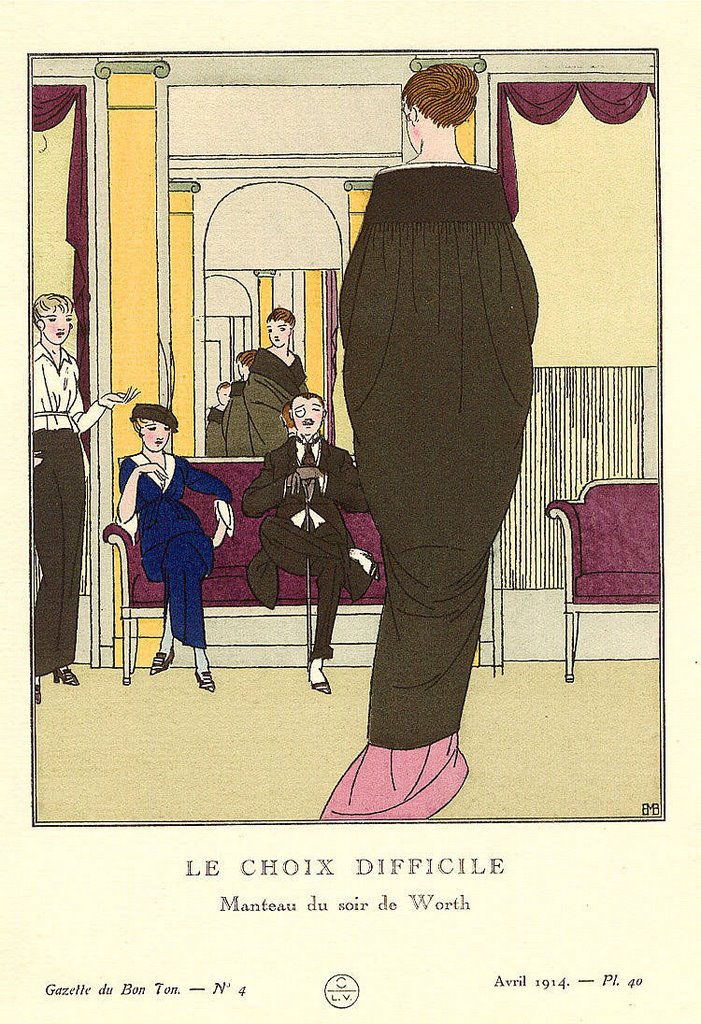
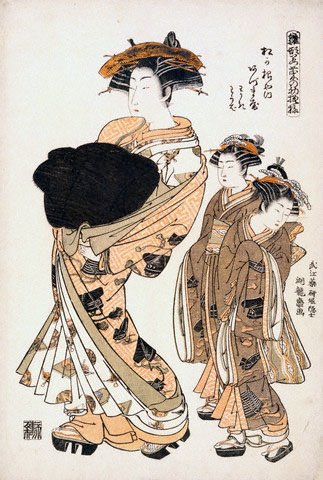
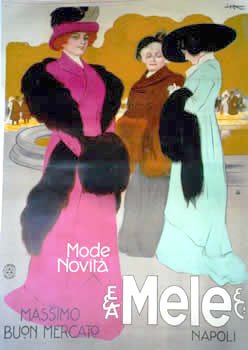
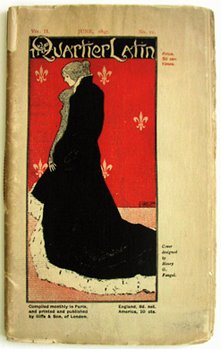
one thing that continues to strike me is how similar the silhouettes of women's clothing during the fin-de-siecle period to the japanese silhouettes of that and previous eras.

if you sort of squint or see them in just thumbnails, it's really hard to tell just which you're seeing, other than, perhaps, the use of pattern on the japanese fabrics.

Labels: , , , , ,

older posts